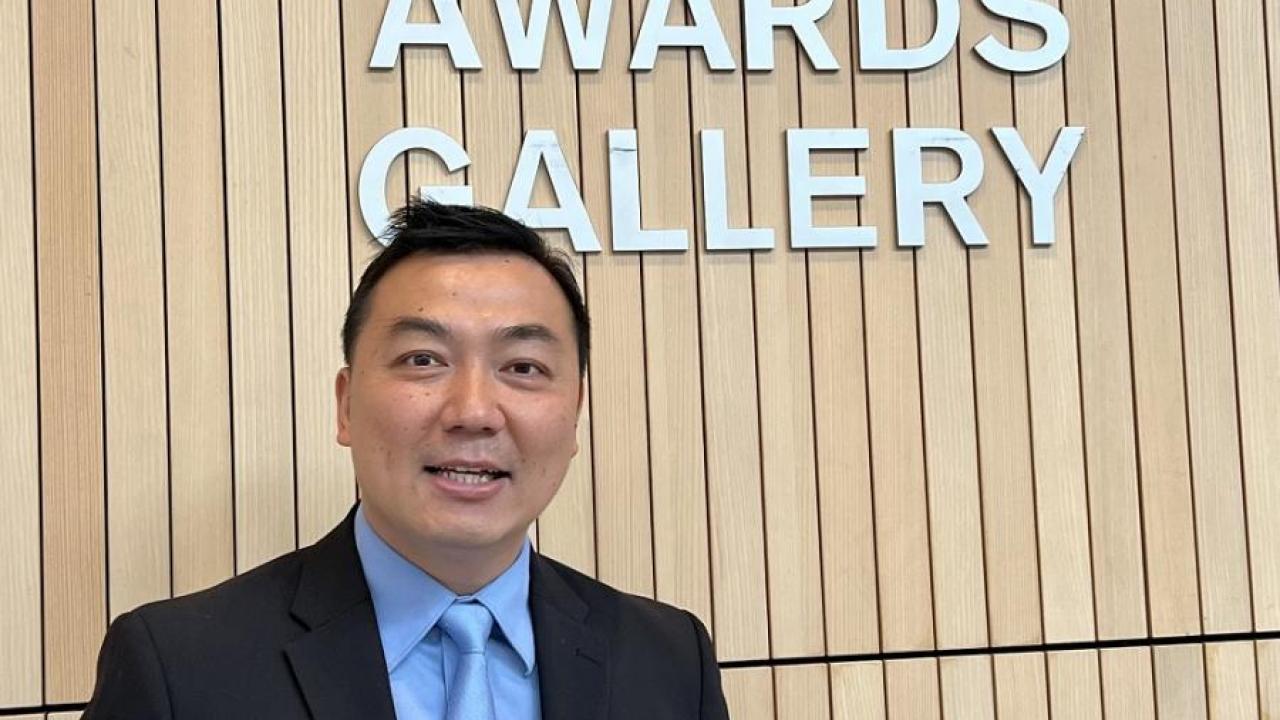
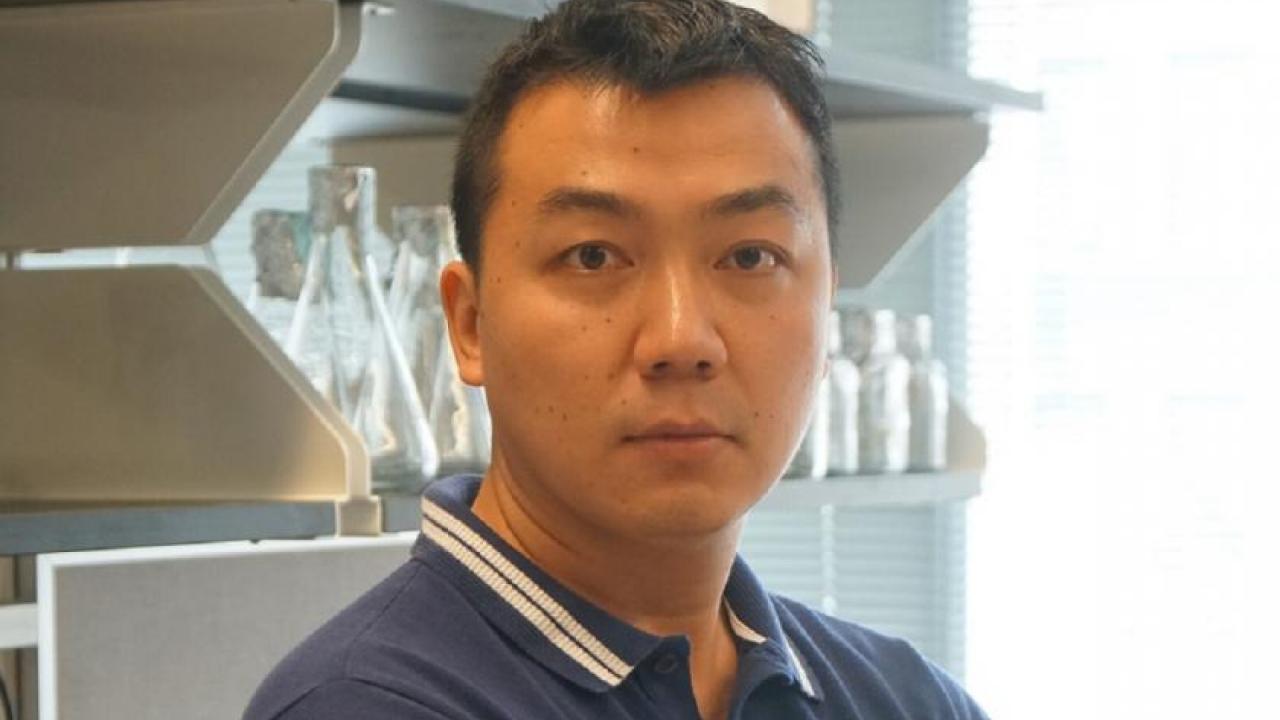
Chao Lu, PhD
- Associate Professor of Genetics and Development
On the web

Overview
Dr. Chao Lu received his PhD from the University of Pennsylvania, where he completed his thesis research in the laboratory of Dr. Craig Thompson. He then joined the laboratory of Dr. C. David Allis at the Rockefeller University for postdoctoral training. Dr. Lu joined the Columbia University faculty in 2018, where he is an Associate Professor in the Department of Genetics and Development and the Herbert Irving Comprehensive Cancer Center.
Dr. Lu's laboratory (https://chaolulab.com/) employs high-throughput genetic and epigenomic technologies to understand the mechanisms by which chromatin is stably compartmentalized and dynamically regulated. Our goal is to apply insights from mechanistic studies to target human diseases driven by chromatin abnormality, such as cancer.
Academic Appointments
- Associate Professor of Genetics and Development
Languages
- Chinese - Mandarin
Gender
- Male
Credentials & Experience
Education & Training
- BS, 2007 Life Sciences, National University of Singapore, Faculty of Medicine (Singapore)
- PhD, 2013 Cancer Biology, University of Pennsylvania School of Medicine
- Fellowship: 2017 Rockefeller University
Honors & Awards
2023: Schaefer Research Scholar, Columbia Vagelos College of Physicians and Surgeons
2022: Irma T. Hirschl and Monique Weill-Caulier Research Award
2020: V Scholar Award for Cancer Research
2020: Maximizing Investigators' Research Award for Early-Stage Investigators, NIGMS
2019: Pew-Stewart Scholar for Cancer Research
2018: AACR Gertrude B. Elion Cancer Research Award
2017: Damon Runyon-Dale F. Frey Award for Breakthrough Scientists
2017: Winner, Blavatnik Regional Award for Young Scientists
2014: Postdoctoral Fellowship Award, Damon Runyon Cancer Research Foundation
2007: Honor’s Degree, National University of Singapore
Research
Chromatin regulation in normal and cancer development
The regulation and biological function of many histone and DNA marks had been well-defined individually. In contrast, much less is understood about how chromatin modifications can “communicate” with each other. Enzymatic activities of chromatin modifiers are known to be sensitive to the local chromatin environment, such that various biochemical and functional interactions exist among chromatin marks. This “crosstalk” between chromatin modifications critically contributes to the partitioning of the epigenome in a stable and sometimes heritable manner. Importantly, disease-associated alterations in one chromatin modification/regulator can have ripple effects on other modifications, creating synthetic vulnerability that is potentially therapeutically exploitable. Thus, our lab (https://chaolulab.com/) seeks to dissect the complex chromatin regulatory network using cutting-edge (epi)genome profiling and editing technologies. We have three main research directions:
(1) Functional interplays between DNA and histone methylation.
Our investigation is inspired by the human exome sequencing studies of childhood overgrowth and intellectual disability (OGID) syndromes. OGID syndromes refer to a group of monogenic growth disorders defined as having increased pre- and post-natal skeletal growth parameters, intellectual disability, facial dysmorphism, and advanced bone age. Exome sequencing studies have identified enzymes involved in chromatin regulation as a major class of pathogenic factors implicated in OGID syndromes. For instance, mutations in histone/DNA methyltransferases NSD1, EZH2, and DNMT3A have been associated with Sotos syndrome, Weaver syndrome, and Tatton-Brown syndrome, respectively.
DNMT3A catalyzes de novo DNA methylation. NSD1 catalyzes the di-methylation of histone H3 lysine 36 (H3K36me2), whereas EZH2 is part of the polycomb repressive complex 2 (PRC2), facilitating tri-methylation of histone H3 lysine 27 (H3K27me3). Since germline mutations in these chromatin enzymes result in largely overlapping accelerated growth phenotypes in humans, we are interested in exploring the functional interactions between NSD1, EZH2, DNMT3A, and their corresponding histone/DNA modifications.
(2) Systems genetics approaches to dissect chromatin regulatory network.
We are interested in harnessing the power of CRISPR-Cas9 genetic screens to uncover novel chromatin crosstalk. Our first effort focused on co-dependency mapping using DepMap database to discover gene-gene functional relationships. To this end, we identified 145 co-dependency “modules” and further defined the molecular context underlying the essentiality of these modules. These analyses assign new chromatin complex composition and function, and predict new functional interactions, including an unexpected co-dependency between two transcriptionally counteracting chromatin complexes - polycomb repressive complex 2 (PRC2) and MLL-MEN1 complex. We will continue to develop the regulatory interactome of chromatin modifications in a high-throughput manner using novel genome-editing technologies.
(3) Chromatin-metabolism crosstalk.
Many chromatin-modifying reactions require not only the proteinaceous enzymes but also small-molecule substrates/co-factors that are intermediates of central carbon metabolism. It has become increasingly evident that cellular metabolic fluctuations affect levels of chromatin modification via altered supply of substrates/co-factors and other mechanisms. We are interested in leveraging our genetic screen platforms to functionally dissect the interplay between metabolic pathways and chromatin modifications in a multiplexed manner.
Research Interests
- Cancer Biology
- Chromatin Biology
- Developmental Biology
- Epigenomics
- Genomics
Selected Publications
- Krug B, Hu B, Chen H, Negrón-Lomas C, Chen X, El Mouatani A, Gretarsson KH, Ptack A, Deshmukh S, Kabir N, Jawhar W, Faria Andrade A, Jabbour E, Harutyunyan AS, Wang X, Taylor R, Lee J, Hulswit M, Faury D, Russo C, Xu X, Yang J, Baguette A, Dahl NA, Weil AG, Ellezam B, Dali R, Blanchette M, Wilson K, Garcia BA, Soni RK, Gallo M, Taylor MD, Kleinman CL, Majewski J, Jabado N, Lu C. H3K27me3 spreading organizes canonical PRC1 chromatin architecture to regulate developmental programs. Nat Genet 2026
- Li JJ, Vasciaveo A, Karagiannis D, Sun Z, Gretarsson KH, Chen X, Ouerfelli O, Socciarelli F, Frankenstein Z, Dong H, Zou M, Yuan W, Yang G, Aizenman GM, Pannellini T, Xu X, Beltran H, Chen Y, Gardner K, Robinson BD, de Bono J, Gozani O, Abate-Shen C, Rubin MA, Loda M, Sawyers CL, Califano A, Lu C, Shen MM. NSD2 targeting reverses plasticity and drug resistance in prostate cancer. Nature 2025
- Gretarsson KH, Abini-Agbomson S, Gloor SL, Weinberg DN, McCuiston JL, Kumary VUS, Hickman AR, Sahu V, Lee R, Xu X, Lipieta N, Flashner S, Adeleke OA, Popova IK, Taylor HF, Noll K, Windham CL, Maryanski DN, Venters BJ, Nakagawa H, Keogh MC, Armache KJ, Lu C. Cancer-associated DNA hypermethylation of Polycomb targets requires DNMT3A dual recognition of histone H2AK119 ubiquitination and the nucleosome acidic patch. Sci Adv 2024
- Chen X, Li Y, Zhu F, Xu X, Estrella B, Pazos MA 2nd, McGuire JT, Karagiannis D, Sahu V, Mustafokulov M, Scuoppo C, Sánchez-Rivera FJ, Soto-Feliciano YM, Pasqualucci L, Ciccia A, Amengual JE, Lu C. Context-defined cancer co-dependency mapping identifies a functional interplay between PRC2 and MLL-MEN1 complex in lymphoma. Nat Commun 2023
- Li Y, Goldberg EM, Chen X, Xu X, McGuire JTM, Leuzzi G, Karagiannis D, Tate T, Farhangdoost N, Horth C, Dai E, Li Z, Zhang Z, Izar B, Que J, Ciccia A, Majewski J, Yoon AJ, Ailles L, Mendelsohn CL, Lu C. Histone methylation antagonism drives tumor immune evasion in squamous cell carcinomas. Mol Cell 2022
- Weinberg DN, Papillon-Cavanagh S, Chen H, Yue Y, Chen X, Rajagopalan KN, Horth C, McGuire JT, Xu X, Nikbakht H, Lemiesz AE, Marchione DM, Marunde MR, Meiners M, Cheek M, Keogh M-C, Bareke E, Djedid A, Harutyunyan AS, Jabado N, Garcia BA, Li H, Allis CD, Majewski J, Lu C. H3K36me2 recruits DNMT3A and shapes the intergenic DNA methylation landscape. Nature 2019
For a complete list of publications, please visit PubMed.gov
Related News
-
Source:
V Foundation - Victory over CancerAugust 27, 2026 -
Source:
Columbia University Herbert Irving Comprehensive Cancer Center (HICCC)-Research SpotlightsJune 25, 2025 - May 8, 2023
-
-
Source:
HICCCAugust 24, 2020